An ocean champion
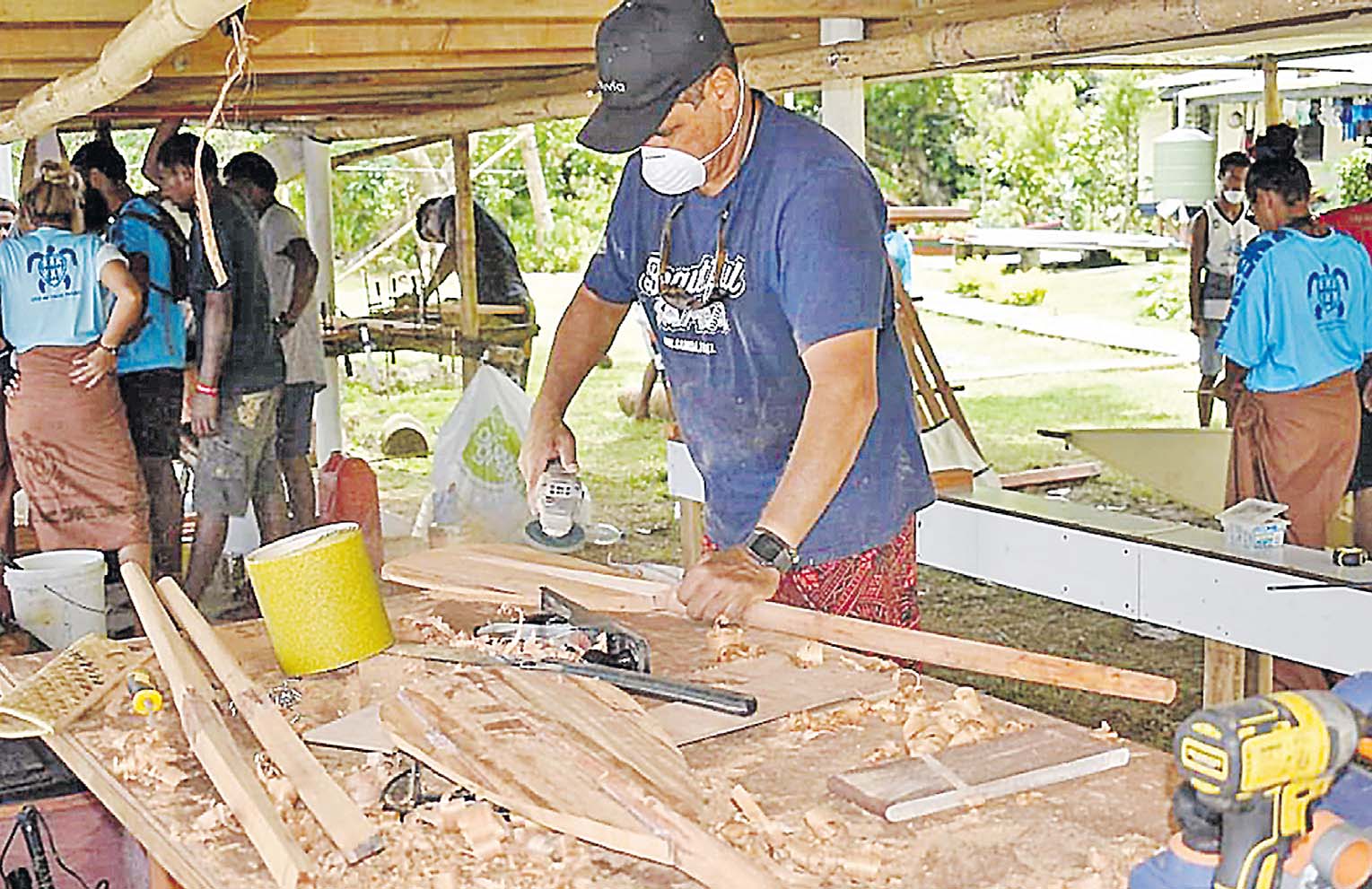
Colin Philp makes paddles for the camakau that was built for villagers on Beqa. Pictures: SUPPLIED/UTO NI YALO TRUST


WHEN Colin Philp passed away on Christmas Day, he took with him a treasure trove of traditional knowledge about the ocean.
This knowledge, gained over many years being up close and personal with the ocean, and the dissemination of it was of utmost importance to him – and I dare say his life’s work, his mission.
Mr Philp was born on October 24, 1961, the eldest child of Colin Ernest Philp and Ana Kafoisolomone Wainiqolo, with paternal links to Hobart, Tasmania and Sawana, Vanuabalavu, Lau on his maternal side.
As a vasu his deep love and affinity for Fijian and Pacific culture and the value and respect they give to the ocean, can only be looked back upon with admiration and with regret at its loss to the only sure thing in life.
He was a believer in the existence of Pacific solutions for Pacific problems, and that these solutions could be found and implemented by Pacific people.
In the webinar series last year for the Pacific Blue Line, Pacific Guardianship – The role of traditional systems and governance – Mr Philp spoke about his “small involvement” in the voyaging revival.
“The settlement of the Pacific is the greatest story of human migration and a story that all Pacific Islanders should be very proud of,” he said.
“Our ancestors were the bravest, wisest explorers that ever lived, crossing an ocean that covers a third of the world’s surface. An ocean that today provides 70 per cent of the world’s global fish catch.
“They were the very first deep sea sailors and navigators, thousands of years before any other explorers left the sight of land our ancestors were venturing out across unknown seas to settle the islands we now call home.
“All of this could not have been achieved without traditional knowledge.”
He said the wayfinders of long ago developed and lived according to a knowledge based system passed on through generations, developed to enable them to live in total equilibrium with nature, with a deep sense of respect, love, and understanding of the earth, wind, ocean, and the sky, were deeply ingrained into the culture of what we have inherited today.
Inspired by this, and the resurgence of traditional voyaging around the Pacific that began in ernest in Hawaii with the building of the Hokule’a and it’s now famous maiden voyage to Tahiti in 1976, Mr Philp embarked on probably the most daring adventure in modern times by a group of Fijians.
With the formation of the Fiji Voyaging Society in 2009 alongside Ratu Manoa Rasigatale and Letila Mitchel, now known as the Uto Ni Yalo foundation, he embarked on a series of voyages that would take him some 30,000 nautical miles around the Pacific with Captain Johnathan ‘Skipper’ Smith, who became a good friend after putting all those miles under the keels of the Uto Ni Yalo as they sailed for the revival of a seemingly lost, but crucial aspect of Pacific culture.
He was dedicated to the passing on of this knowledge to a new generation of navigators that now grace the deck of the Uto Ni Yalo.
Mr Philp also believed that as descendants of the greatest navigators that ever lived, Pacific people also had to navigate change and adapt to the world we live in now.
“With the challenges of climate change and modern development in our island nations we need to breed a new line of navigators that can lead us into the future.”
Mr Philp was a firm holder of the belief that the manner in which we transport people and cargo over our ocean was in need of revolution and that this revolution could be led by Pacific people.
“Our island nations have adopted western options for passenger and cargo sea transport and our governments have always looked abroad for solutions to our sea transport needs.
“We import old vessels that are way past their use by date and no longer considered safe in their countries of origin, vessels that are so fossil fuel dependent that a large percentage of our annual fuel imports are dedicated to running these gas guzzlers.
“I think we have to ask ourselves in the Pacific some very important questions, have we forgotten who we are? Are we not direct descendants of the best sailors and navigators that ever lived? Why aren’t we seeking our own Pacific solutions to our sea transport needs? “Surely we have the answers in the Pacific and we don’t need any more internationally recognised consultants to show us how it should be done.”
Mr Philp was part of a small group of people that formed the Sustainable Sea Transport Initiative in Fiji, a non-profit working to completely revolutionise transport in the Pacific, which was working on a pilot project in Fiji, considering the use of sail and electric-powered vessels and offering solutions to outer island communities based largely on traditional knowledge, integrated and weaved into modern technological systems.
In order to do this he believed our education system needed to recognise the unique circumstances of the settlement of the Pacific and the navigational traditions that facilitated it, and pass this on to the youth.
“As navigators, if you’re trying to navigate somewhere you need to know where you’re coming from, in a practical sense if you’re heading out to sea towards an island on the horizon, you always want to know where the safety of home is so you can return there.
“In that context I think we first need to understand who we are if we want to know where we want to go in the future.”
For Mr Philp the future of the Pacific was young Pacific people, and he really went out of his way to ensure the future was secured Join us next week as we learn more about the man behind the mission.
This knowledge, gained over many years being up close and personal with the ocean, and the dissemination of it was of utmost importance to him – and I dare say his life’s work, his mission.
Mr Philp was born on October 24, 1961, the eldest child of Colin Ernest Philp and Ana Kafoisolomone Wainiqolo, with paternal links to Hobart, Tasmania and Sawana, Vanuabalavu, Lau on his maternal side.
As a vasu his deep love and affinity for Fijian and Pacific culture and the value and respect they give to the ocean, can only be looked back upon with admiration and with regret at its loss to the only sure thing in life.
He was a believer in the existence of Pacific solutions for Pacific problems, and that these solutions could be found and implemented by Pacific people.
In the webinar series last year for the Pacific Blue Line, Pacific Guardianship – The role of traditional systems and governance – Mr Philp spoke about his “small involvement” in the voyaging revival.
“The settlement of the Pacific is the greatest story of human migration and a story that all Pacific Islanders should be very proud of,” he said.
“Our ancestors were the bravest, wisest explorers that ever lived, crossing an ocean that covers a third of the world’s surface. An ocean that today provides 70 per cent of the world’s global fish catch.
“They were the very first deep sea sailors and navigators, thousands of years before any other explorers left the sight of land our ancestors were venturing out across unknown seas to settle the islands we now call home.
“All of this could not have been achieved without traditional knowledge.”
He said the wayfinders of long ago developed and lived according to a knowledge based system passed on through generations, developed to enable them to live in total equilibrium with nature, with a deep sense of respect, love, and understanding of the earth, wind, ocean, and the sky, were deeply ingrained into the culture of what we have inherited today.
Inspired by this, and the resurgence of traditional voyaging around the Pacific that began in ernest in Hawaii with the building of the Hokule’a and it’s now famous maiden voyage to Tahiti in 1976, Mr Philp embarked on probably the most daring adventure in modern times by a group of Fijians.
With the formation of the Fiji Voyaging Society in 2009 alongside Ratu Manoa Rasigatale and Letila Mitchel, now known as the Uto Ni Yalo foundation, he embarked on a series of voyages that would take him some 30,000 nautical miles around the Pacific with Captain Johnathan ‘Skipper’ Smith, who became a good friend after putting all those miles under the keels of the Uto Ni Yalo as they sailed for the revival of a seemingly lost, but crucial aspect of Pacific culture.
He was dedicated to the passing on of this knowledge to a new generation of navigators that now grace the deck of the Uto Ni Yalo.
Mr Philp also believed that as descendants of the greatest navigators that ever lived, Pacific people also had to navigate change and adapt to the world we live in now.
“With the challenges of climate change and modern development in our island nations we need to breed a new line of navigators that can lead us into the future.”
Mr Philp was a firm holder of the belief that the manner in which we transport people and cargo over our ocean was in need of revolution and that this revolution could be led by Pacific people.
“Our island nations have adopted western options for passenger and cargo sea transport and our governments have always looked abroad for solutions to our sea transport needs.
“We import old vessels that are way past their use by date and no longer considered safe in their countries of origin, vessels that are so fossil fuel dependent that a large percentage of our annual fuel imports are dedicated to running these gas guzzlers.
“I think we have to ask ourselves in the Pacific some very important questions, have we forgotten who we are? Are we not direct descendants of the best sailors and navigators that ever lived? Why aren’t we seeking our own Pacific solutions to our sea transport needs? “Surely we have the answers in the Pacific and we don’t need any more internationally recognised consultants to show us how it should be done.”
Mr Philp was part of a small group of people that formed the Sustainable Sea Transport Initiative in Fiji, a non-profit working to completely revolutionise transport in the Pacific, which was working on a pilot project in Fiji, considering the use of sail and electric-powered vessels and offering solutions to outer island communities based largely on traditional knowledge, integrated and weaved into modern technological systems.
In order to do this he believed our education system needed to recognise the unique circumstances of the settlement of the Pacific and the navigational traditions that facilitated it, and pass this on to the youth.
“As navigators, if you’re trying to navigate somewhere you need to know where you’re coming from, in a practical sense if you’re heading out to sea towards an island on the horizon, you always want to know where the safety of home is so you can return there.
“In that context I think we first need to understand who we are if we want to know where we want to go in the future.”
For Mr Philp the future of the Pacific was young Pacific people, and he really went out of his way to ensure the future was secured Join us next week as we learn more about the man behind the mission.